
We pave open areas in concrete across Hamilton, the ground that is neither the driveway nor the patio. Parking bays, turning areas, walkways around buildings, shed and container aprons, bin and service areas, and re-paving over a surface that has failed are all laid by our own crew. Large areas live or die on the falls and the joint layout, so both are set out before anything is poured. Re-paving over a failed surface only works if the base under it has not moved.
On a big pour the joints decide where the slab cracks, which is the difference between a surface that looks deliberate in five years and one that looks neglected. Ready mix is produced to NZS 3104, and the thickness follows the heaviest wheel load rather than the square metres, so tell us what parks on it before we price it. Every job starts with a free site visit where we shoot the levels and work out where the water leaves.
4.8/5 Ratings
Hamilton
Projects Completed
Years in Business
Happy Clients
Paved Areas
Paved areas get used harder than a patio and are seen less than a driveway. These are the six we are asked for most.
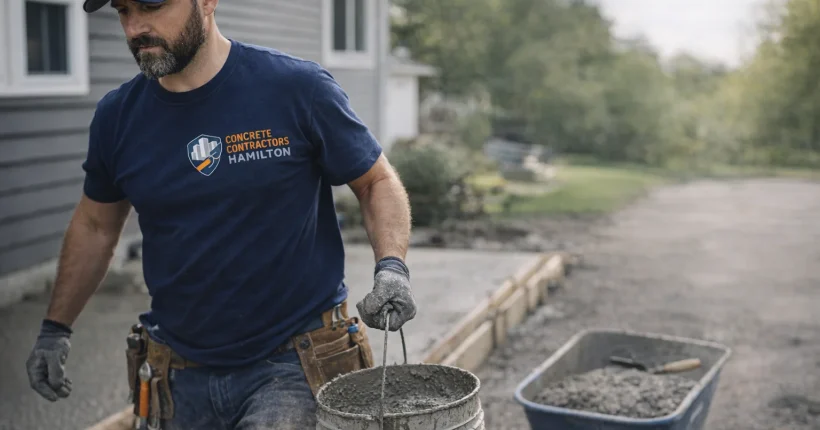
Off-street parking is the usual reason people call us to pave an area, whether that is a second car off the street or a visitor bay beside the house. Wheels concentrate load on a small footprint and always in the same place, so a parking bay wants the same build as a driveway.
We pour at 100 mm of 20 MPa concrete over compacted basecourse with mesh through it, thicker where a heavier vehicle uses it. Mention the heaviest thing that will sit on it, including a caravan on its jockey wheel.
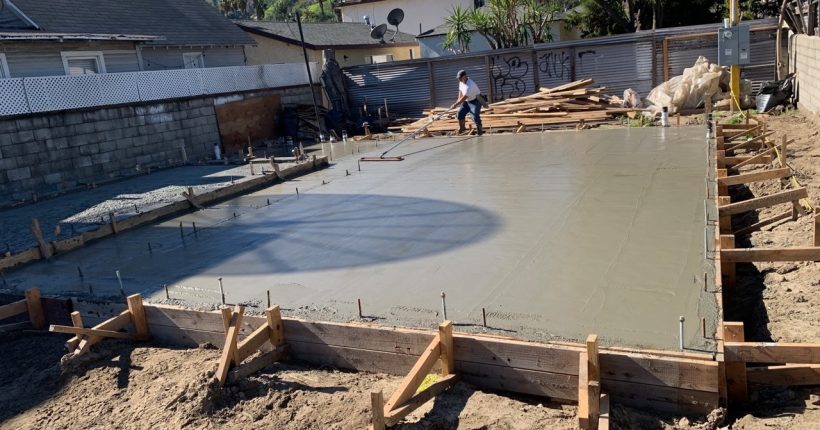
We build turning areas heavier, because turning is the hardest thing you can do to a paved surface. A wheel turned on the spot scuffs and stresses the top of the slab far more than driving straight over it.
We keep joints out of the turning arc where the layout allows, and lift the slab to 150 mm where the turning is heavy. Tell us which way vehicles will swing, because that decides the joint plan.
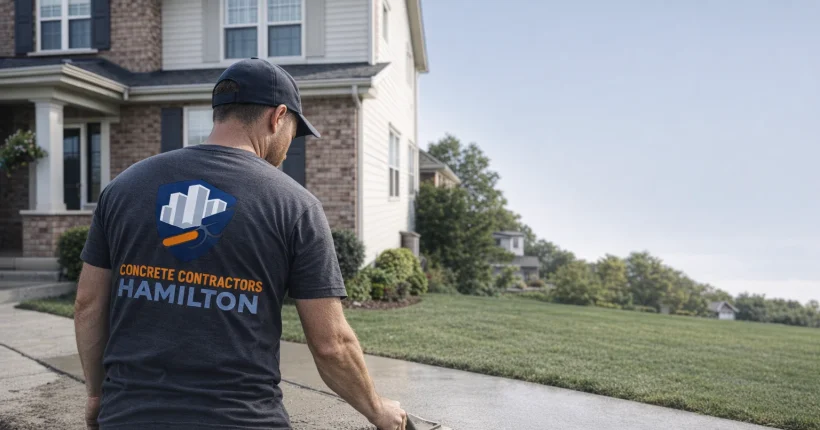
The perimeter paving we lay solves two problems at once, giving you a clean surface to walk on and taking water away from the foundation. Falls run away from the wall, never towards it, and the surface finishes below the cladding line so nothing bridges into the building.
We keep an expansion joint against the wall so the paving can move without pushing on the structure, and pour at 100 mm with mesh. Say where the downpipes discharge before we set the levels.
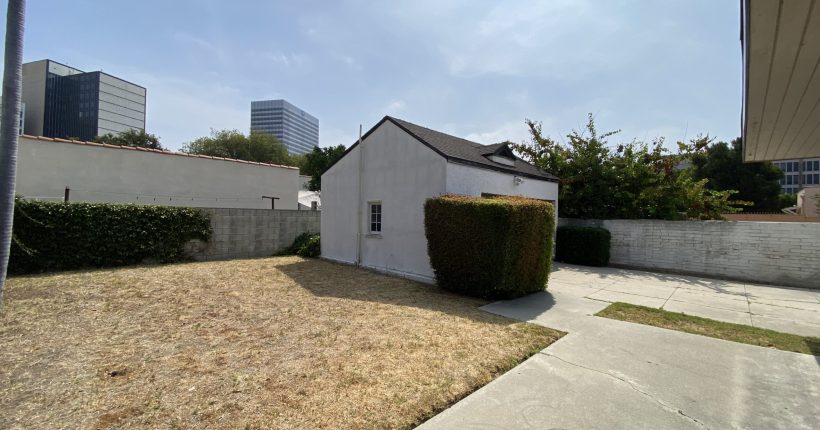
We pour proper aprons where you are running machinery, a trailer or a container on and off. Point loads from container corner castings and jockey wheels punch through an under-built slab, and they arrive at the edges where a slab is weakest.
We go to 150 mm in 25 MPa with a thickened edge and heavier steel, lifting to 30 MPa above 3 tonnes gross. Tell us the weights and how they land, because a slab designed for a car does not survive a loaded container corner.
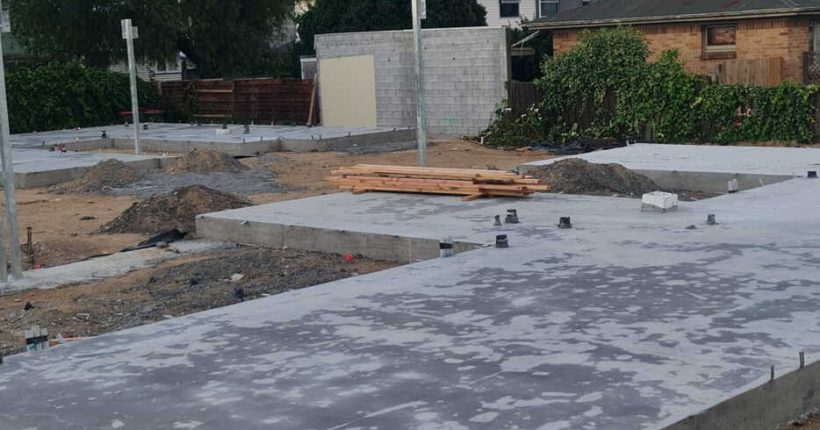
The bin and service areas we pave get more traffic than anyone expects. A bin pad takes wheeled load in the same two tracks every week and usually sits where water already collects. We pour these at 100 mm, fall them somewhere sensible, and keep the surface texture open so it does not turn slick under algae.
Tell us if the area holds a tap or a gully, since drainage fittings have to be set to the finished level before the pour.
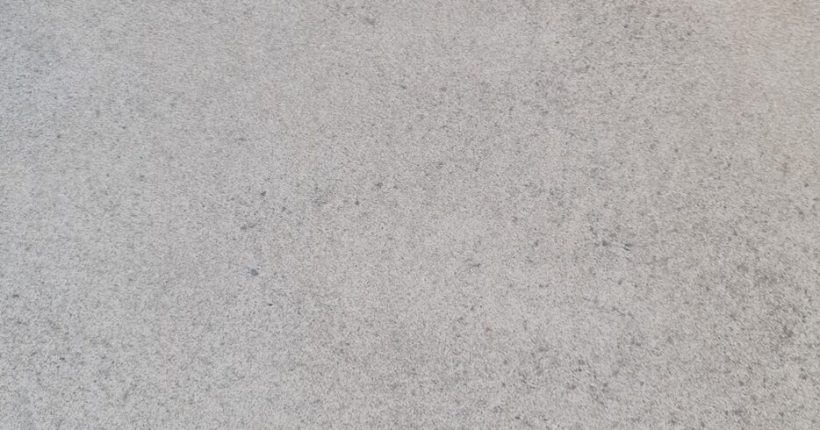
Why the old surface failed decides what we quote. Broken edges and rocking panels point at a base that was never built for the load. Fine surface crazing is cosmetic and does not need a new slab at all. Where the base has gone, a topping cracks along the same lines within a couple of seasons, so we take it out and rebuild with basecourse compacted in layers no thicker than 150 mm.
If a repair will do, that is what we will tell you.
Paving Build Method
STEP ONE
We shoot the levels across the whole area, work out where the water leaves and check what the subgrade is made of. We look at what will drive or sit on it, and where a truck or pump can reach. We come out free of charge, and the price is set afterwards.
STEP TWO
The joint plan gets drawn before the quote, because on a large area it decides where the slab is allowed to crack. Inside a few days the written quote arrives and states the slab thickness, the concrete grade, the mesh, the basecourse depth and the falls for your site.
STEP THREE
Take the ground down to depth, cart away, basecourse compacted in layers no thicker than 150 mm. Boxing set to the falls, mesh on chairs, then place, screed, float and finish. Saw cuts happen that day or early the next, temperature depending. Feet after a day or two, wheels after about seven days.
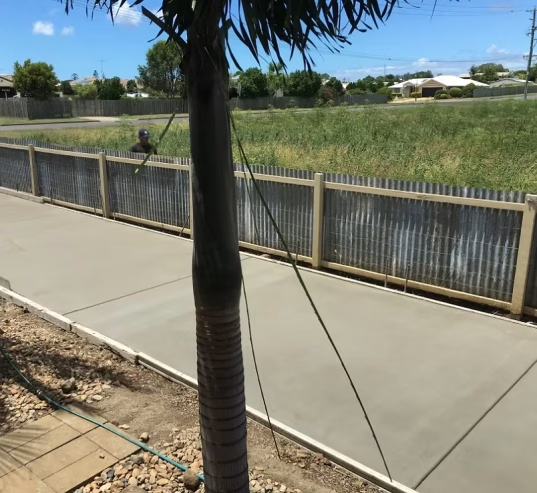
Plain broom finish paving runs $100 to $150 per square metre on areas of roughly 30 square metres and up. Coloured concrete sits at $120 to $170 and exposed aggregate $130 to $200+. Figures stay a guide until the site is measured, and we price your area after the site visit.
What moves a paving price, in order of impact.
Free Site Visit
A concreter shoots the levels, checks the subgrade and the access, and works out where the water leaves before anything is priced. Bring the weights of whatever will sit on it. No charge and no obligation.
Hamilton Ground Conditions
A large paved area covers more ground than anything else on a property, so it usually crosses more than one subgrade. Four things decide what goes underneath.
Under most of the city the ground rises and dips in low mounds and shallow swales. A paved area of any size crosses both, so the base depth often changes across the same slab.
Poorly drained silt loams in the swales. Water sits under the slab after rain and softens the base, which is what turns a firm parking bay into a rocking one over a few winters.
A flat area with nowhere for water to go holds it. We shoot levels across the whole area and design a fall to a discharge point before pricing, because retrofitting a channel through a finished slab means cutting it.
Council records peat over close to a quarter of the city, mostly through the western suburbs, and it appears as buried layers elsewhere. Groundwater across the western city sits inside the top 3 metres, shallow enough to soften a subgrade from underneath.
We test the subgrade across the area, not at one corner. On a paved area big enough to matter, one hole tells you about one hole.
What Sits Under the Slab
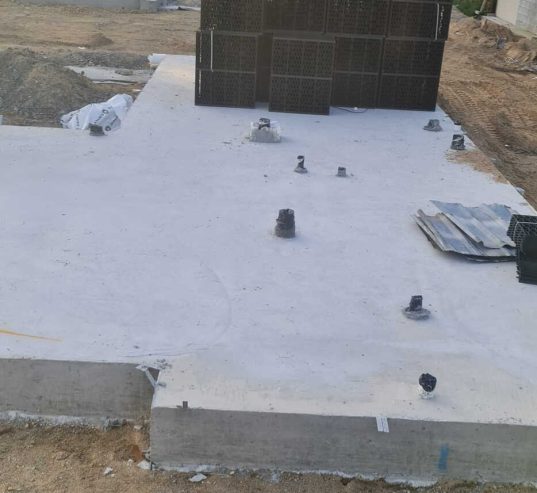
The base does more for a paved area than the concrete does. We build on compacted aggregate placed in layers no thicker than 150 mm, because a single thick lift cannot be compacted through its full depth and it is the commonest shortcut on a paving job. Depth is set by the loading and the subgrade, and it is a decision made on site rather than off a rate card.
Aggregate is specified to the national basecourse standard, published by the NZ Transport Agency as NZTA M04. That standard sets the grading, the crushing and the cleanness of the stone, which is what stops a base pumping fines up into the slab over time.
Concrete shrinks as it cures and it will crack somewhere. Control joints decide where. We set them out before the pour, keep panels square where we can, and keep joints away from turning arcs and out of the middle of a doorway. On a large area the joint plan is the difference between a surface that ages tidily and one that maps itself in random lines.Paving, driveways and patios are the same trade with different joint plans, and one Hamilton concrete crew pouring all three keeps the falls and the finishes consistent across a property.
Basecourse aggregate specification per NZTA M04:2024. Reinforcing mesh to AS/NZS 4671. Concrete supply to NZS 3104 and construction to NZS 3109. The groundwater and soils picture comes out of Hamilton City Council geotechnical reporting, mapped at catchment scale and not a substitute for site assessment.
Pavers look better on day one and cost more to keep. Every joint between them is a route for weeds and a place for the bedding sand to wash out, and a paved area that carries wheels will rut where the bedding moves. A poured slab has joints you can count on one hand and they are cut where we choose.
Pavers win in two situations worth being honest about. They lift and relay, so a surface over services that will be dug up again is better in pavers. They also suit small irregular areas where boxing a slab costs more than the concrete does. Everywhere else, on Hamilton ground and under load, poured concrete holds its shape for longer.
Concrete Paving, Hamilton
Parking bays, turning areas, walkways, shed and container aprons, service areas and full re-paving. Licensed, insured and building on Hamilton ground for over ten years. Tell us the area and what it has to carry.
Concrete Paving Questions
Plain broom finish runs $100 to $150 per square metre on areas of about 30 square metres and up. Coloured is $120 to $170 and exposed aggregate $130 to $200+. The figure firms up on site, whether the job is in Hamilton or out of town.
100 mm of 20 MPa concrete with 665 mesh handles cars and light vans. Heavier vehicles, containers and machinery need more thickness and a deeper basecourse under them. The load decides it, so tell us the heaviest thing that will sit on the area, including a caravan on its jockey wheel.
For anything carrying wheels on Hamilton ground, usually yes. Pavers move where the bedding sand washes out and every joint grows weeds. Pavers do win over services you will dig up again, since they lift and relay, and on small irregular areas where boxing a slab costs more than the concrete.
Walking after a day or two and driving after about a week. Joints get cut the same day as the pour or the next morning when it is cold. Concrete keeps gaining strength for weeks, so keep heavy machinery off it for longer than a car.
Sometimes, and often it is the wrong call. A topping poured over a base that has already failed cracks along the same lines within a couple of seasons. We look at what caused the failure first. Where the base has gone we take the old surface out and rebuild from the subgrade.
We pave across the region. Morrinsville, Cambridge and the rural blocks between them are regular runs, and travel is counted when we quote. Rural yards and lifestyle blocks usually need a deeper base than a city section, and that is set on site after we dig.