
Concrete Contractors Hamilton pour house slabs, driveways, parking and turning areas, paths, shed pads and outdoor living areas on Te Kauwhata sections, and repair or replace older surfaces where a property already has them. Build-site work is poured by our own crew, and slabs are set out to the engineer’s drawings rather than to a standard detail. Te Kauwhata is building faster than its size suggests, with private dwellings up from 861 at the 2018 Census to 1,344 in 2023 and an estimated resident population that has gone from 2,590 in 2020 to 3,780 at 30 June 2025.
That means more first pours than replacements, and more sections where the fill went in last year, not forty years ago, so compaction under a new driveway matters here in a way it does not on a settled section. A lot of the work lands on a live building site, so timing around the builder matters as much as the mix. Every job starts with a free on-site assessment and a written quote.
4.8/5 Ratings
Hamilton
Projects Completed
Years in Business
Happy Clients
Concrete Services in Te Kauwhata
We lay house slabs, driveways, parking areas, farm hardstand and outdoor areas around Te Kauwhata.
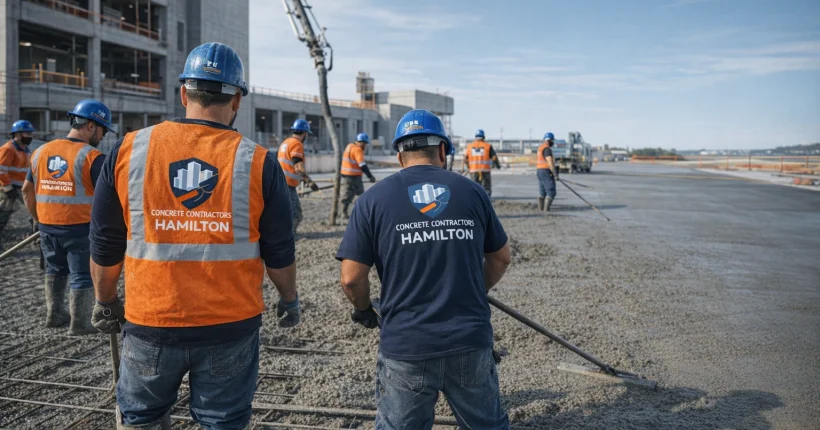
New-section driveways we pour once the heavy site traffic is finished, because a fresh slab and a laden truck do not mix.
The default build here is 100 mm of 20 MPa over compacted basecourse, 665 mesh in the top third at 30 mm cover, joints saw-cut. That carries cars, utes and vans up to 2.5 tonnes.
Where the fill under the driveway is recent, we dig out and compact properly first. Concrete laid over loose builder’s fill settles, and it settles unevenly.
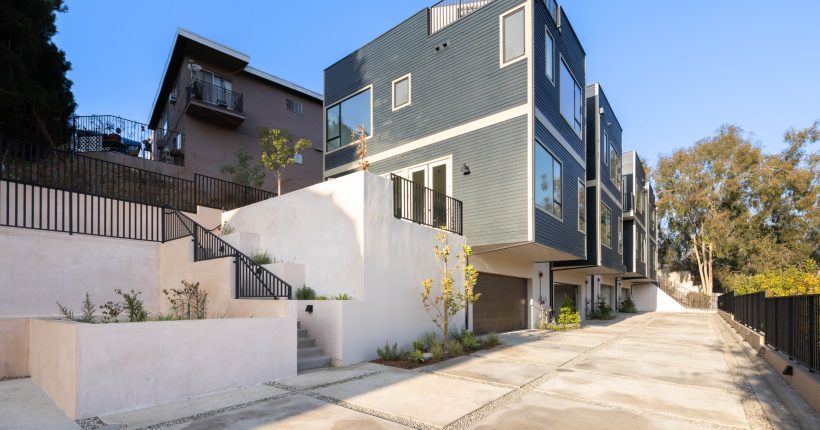
House slabs we pour to the engineer or designer detail under NZS 3604, so the specification comes off the plan rather than off a standard detail.
You get the slab, the thickened edges, the reinforcement and the finish ready for the framing crew, set out to the levels on the drawings.
If a geotechnical report exists for the section, send it through before the site visit and it saves a round trip, because design, area and ground conditions are what decide the work.
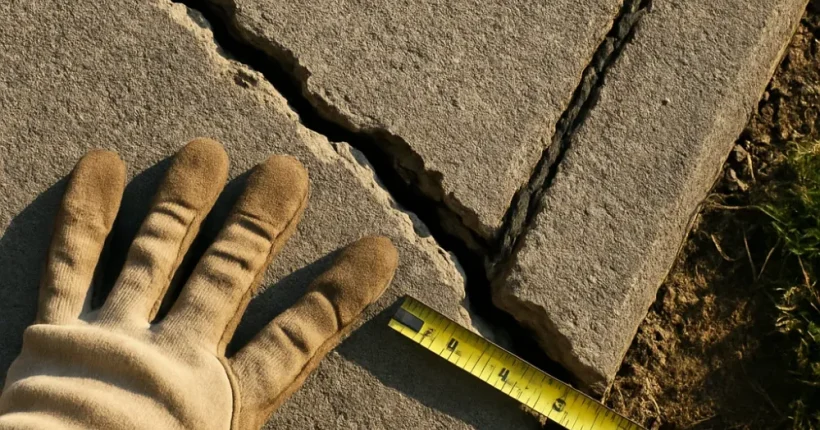
Outdoor areas we set out at the same time as the house, so the finished level meets the slider threshold and falls away from the building.
Four-bedroom homes now make up 36.1% of Te Kauwhata dwellings, just ahead of three-bedroom homes at 35.6%, which is a housing stock with room outdoors as well as in.
Pool surrounds need the finish decided early. A slip-resistant texture and the sealer specification are chosen before the pour, not after the fence goes up.
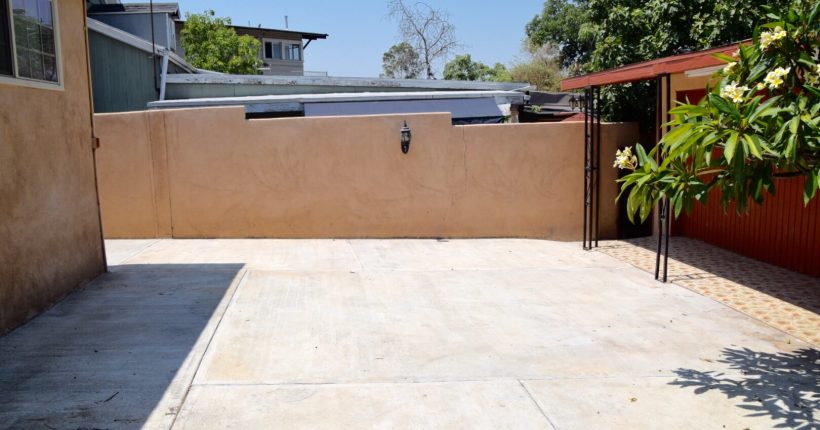
We pour shed pads and garage floors on the new sections, and the slab is set by what will stand on it, not by the size of the building.
A pad for a garden shed and a pad for a workshop with a hoist over it are different pours. Standard is 100 mm, thicker where load concentrates, and the mix steps up above 3 tonnes gross. Say what the space is for while it is still being quoted.
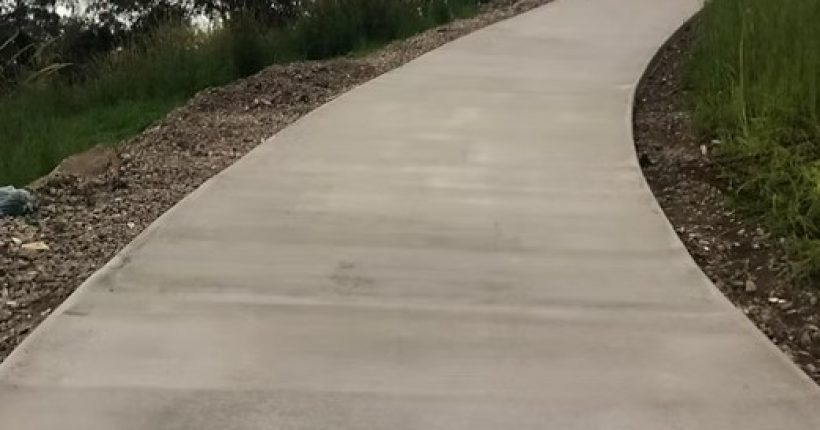
Outside the new subdivisions we pour access strips and hardstand for the blocks between the town and the lake, and these are built heavier than anything inside it.
Width suits the widest thing that uses it rather than the family car. Falls move water off before it can sit and soften the base. We build the base course up before pouring, because a surface is only ever as good as what is under it.
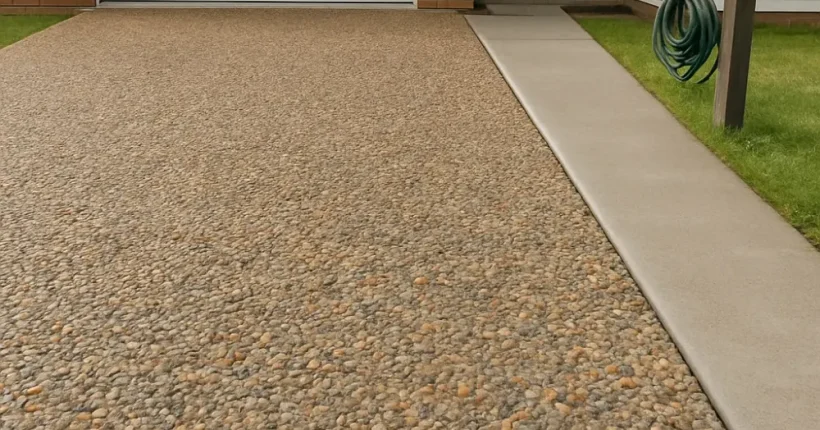
Parking areas are what we get asked for most often in Te Kauwhata, because 13.5% of households here run three vehicles, 5.6% run four and 3.7% run five or more, on 2023 Census figures.
Extra hardstand beside the driveway gives you somewhere for the trailer, the boat or the third car that is not the lawn.
A plain broom finish extension is the simplest concrete you will buy on the property, because what it takes follows area and finish, not complexity.
The small pours around a new house are the ones we get called back for, because they get forgotten until the landscaper turns up and by then the concrete truck has gone.
We take these on with the main pour where we can, so the path to the back door, the clothesline pad and the heat pump base all go in on one setup.
Combining narrow work with a larger pour is what keeps it sensible, because a strip on its own carries the whole mobilisation.
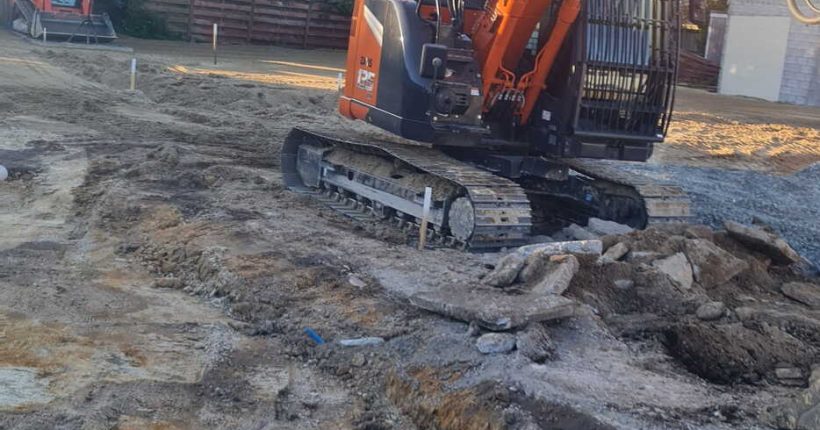
Decorative finishes we put in with the original pour cost least, and a new section is the one chance to get them at that price.
Exposed aggregate takes surface retarder, a wash-off and stone selection. Stamped or patterned work takes colour hardener, release agent, mat work and a grip additive in the sealer.
Stone and pattern selection has to be locked in before the order goes to the plant.
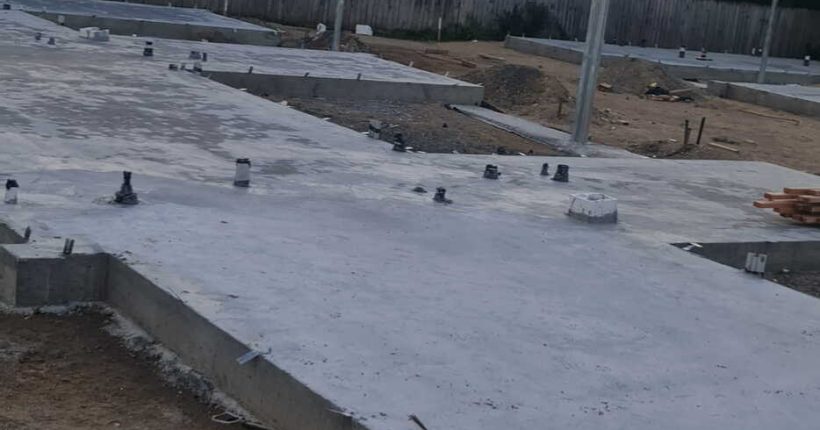
We repair concrete rather than replacing it wherever the slab underneath is still sound, and on newer sections most of what goes wrong is settlement, not failure.
Fill on a new subdivision keeps compacting for years, which shows up as a panel that has dropped at one corner. That panel gets lifted and re-poured to the nearest joints. Cracks that have stopped moving get cut, filled and sealed rather than covered over.
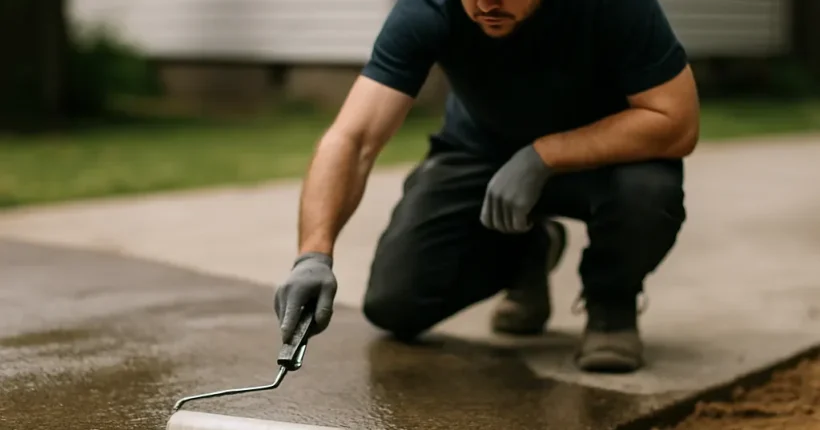
We seal new driveways once the concrete has finished drying, and on a new build it is worth doing before the first vehicle leaks on it.
Sealed concrete keeps oil and tyre marking out of the surface instead of letting it soak into somewhere it cannot be washed out of. A penetrating sealer soaks in and will not peel in full sun. The surface has to be clean and dry, so it gets booked separately from the pour.
Free on-site assessment
The assessment is free. We look at the ground, the falls and the drainage first, then put the quote in writing.
| Step | What happens |
|---|---|
| 1. Free Te Kauwhata Site Visit and Levels | We come out, take levels off the section, check where the truck can get to and confirm what stage the build is at. No charge, no obligation. |
| 2. Written Quote and Build Stage Booked | The quote takes in the whole scope, and we agree which build stage each pour slots into. |
| 3. Excavation, Basecourse and Boxing | Excavation to depth, soft or loose fill removed, then compacted basecourse, 100 mm over good ground and 200 mm or more over soft subgrade. Boxing set to the finished levels. |
| 4. Steel, Pour and Finish | Mesh chaired at 30 mm cover, then place, screed, float and finish. Ready mix comes to NZS 3104 and the work follows NZS 3109. |
| 5. Saw Cutting, Curing and Sign Off | Joints saw-cut, same day or next morning if it is cold. We walk the finished job with you and tell you when it takes foot traffic and when it takes a vehicle. |
Te Kauwhata Concrete Pricing
These brackets are not a quote. Pricing happens after the free assessment on your section.
Driveways and flatwork, per m², roughly 30 m² and up
| Finish | Range per m² |
|---|---|
| Plain or broom finish | $100 to $150 |
| Coloured concrete | $120 to $170 |
| Exposed aggregate | $130 to $200+ |
| Stamped or patterned | $120 to $170 |
Patios, paths and smaller areas, per m²
| Item | Range per m² |
|---|---|
| Patio or courtyard, plain, roughly 15 to 30 m² | $100 to $150 |
| Paths, footpaths and narrow strips | $100 to $150 |
On a new Te Kauwhata section the driveway is usually the last pour in the build, so it pays to price it alongside the paths and the outdoor area, not as three separate visits.
Each range covers subgrade preparation, excavation and cartage, compacted basecourse, reinforcement, the pour, the finish, joint cutting and clean-up. Plenty of published rates are supply and place only, with the excavation, base and drainage sitting outside the number, so ask what a quote actually includes before comparing two.
Quoted per job with no published figure: house slabs and foundations to NZS 3604, engineered slabs, commercial slabs and hardstand, breaking out existing concrete, and sealing.
Te Kauwhata Site Conditions
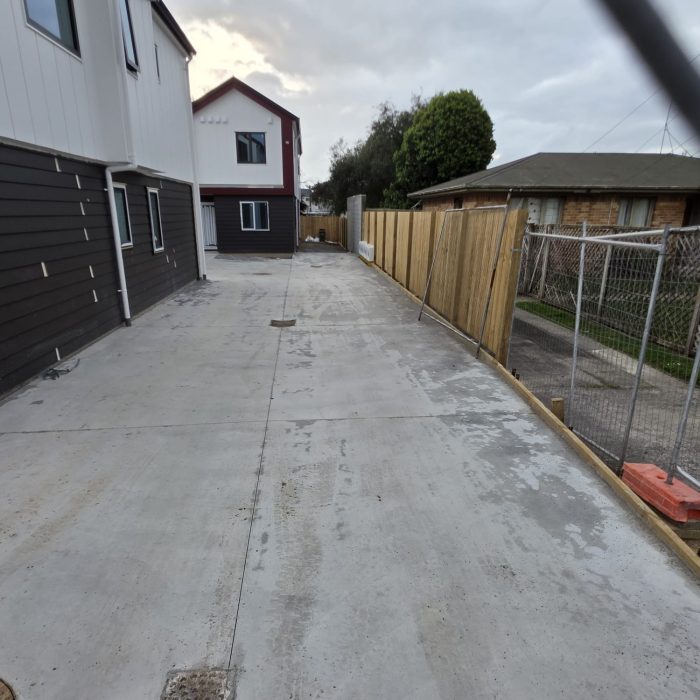
Te Kauwhata is the fastest-moving housing pipeline of the towns we cover. Private dwellings rose from 861 at the 2018 Census to 1,344 per the 2023 Census, and dwellings under construction on census night went from 21 to 72 over the same five years. Against a total of 1,344 dwellings, that is an unusual rate of building for a place this size.
Construction is the largest employing industry here, at 12.6% of the working population on 2023 Census figures.
What that means for concrete is a different mix of work to an established town. More first pours than replacements, more slabs poured to a plan, more driveways waiting on a build programme, and more sections where the fill went in last year, not forty years ago. Compaction under a new driveway matters here in a way it does not on a settled section.
Waikato District Council describes the township as surrounded by dairy farms, drystock holdings and horticulture, so shed floors, implement bays and farm access sit alongside the residential work. The council also names the Whangamarino wetland north of the town as the second largest peat bog and swamp complex in the North Island. That is a description of the wetland and nothing more. Ground conditions on your section get checked at the site visit before anything is priced.
Fitting a pour between the builder and the landscaper on a Te Kauwhata section takes a schedule that already has room in it, which is why the concrete team in Hamilton programmes these jobs alongside the city work.
Free on-site assessment
The assessment is free. We look at the ground, the falls and the drainage first, then put the quote in writing.
Te Kauwhata Concrete Questions
Plain broom finish runs $100 to $150 per m². On a new section the variable is usually what sits under the driveway, because recent fill has to come out and be compacted before the base goes in. That gets priced at the free assessment, not guessed from the section size.
We need the address, vehicle use, road frontage and truck access. We use those details to scope the concrete work and give you a written quote.
After the heavy site traffic is done, which usually means late in the programme. A new driveway poured while trucks and diggers are still coming and going gets damaged, and the repair costs more than the wait. We agree the stage with you and the builder at the site visit.
House slabs are poured to the engineer’s or designer’s detail under NZS 3604, with ready mix produced to NZS 3104 and the work carried out to NZS 3109. The design decides thickness, edge detail and reinforcement, so the slab specification for a Te Kauwhata build comes off your plans rather than a standard rate.
Yes, and on a new Te Kauwhata build that is most of the job. We book the pour against the build stage, confirm access on the day and coordinate with whoever is running the site. Give us the programme early and the dates are easier to hold.
The Whangamarino wetland north of the town is described by Waikato District Council as the second largest peat bog and swamp complex in the North Island, and by the Department of Conservation as a 7,000 hectare mosaic of swamps, fens and peat bogs. That describes the wetland, and it says nothing about what is under any particular Te Kauwhata section. We check the ground on your site at the free assessment and price the base off what is actually there. Where a section needs an engineered slab, that is quoted per job.
Foot traffic after a day or two, vehicles at seven days and ten in the colder months, heavier loads later depending on the mix. On a build programme that timing usually needs planning around, so we give you the dates at the same time as the quote for the Te Kauwhata pour.
Te Kauwhata township and the surrounding rural blocks, along with the wider Waikato District and the rest of the region where the job suits.