
We build, replace, widen and repair concrete driveways across Hamilton City, from single-car drives and doubles through to decorative finishes and rural entranceways. The standard residential build is 100 mm of 20 MPa concrete over compacted basecourse, with 665 mesh held in the top third at 30 mm cover and joints saw-cut. Where a boat, a caravan or a work truck lives on the driveway, the thickness and the steel move before the price does.
Every job starts with a free on-site visit where we check the subgrade, the falls and where the water actually goes, then a written quote built on what your site needs, not on a rate card. Where the work reaches the crossing between your boundary and the road, we lodge the Hamilton City Council application and book the inspections, so that is one less thing on your list. Joints are saw-cut the same day, or the next morning if it is cold.
4.8/5 Ratings
Hamilton
Projects Completed
Years in Business
Happy Clients
Driveway Options
Concrete is usually decided before the finish is. These are the six we are asked for most often, and what separates them.
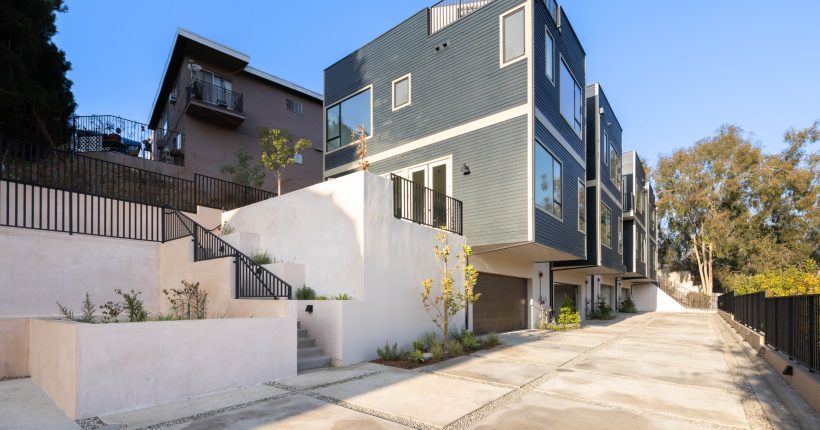
For most Hamilton homes the plain or broom finish we lay is the right call. It takes cars, utes and vans up to 2.5 tonnes, and it is the cheapest option per square metre because the pour is straightforward and access is usually good. A single-car driveway runs about 18 m², a double about 36 m².
If you park a boat, a horse truck or a loaded trade vehicle on it, say so at the site visit. That changes the slab thickness and the mesh, and it is cheaper to build for it now than to fix it later.
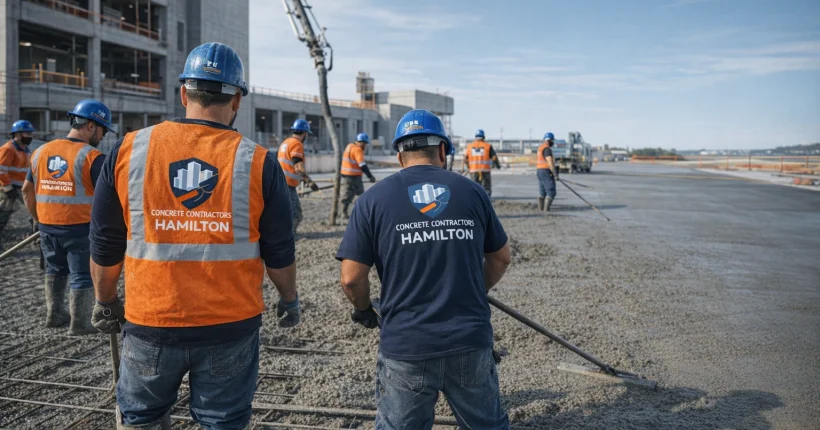
Two things decide the commercial driveways we build. The heaviest vehicle that will use it, and whether your site can afford to stop. We stage pours so access stays open, and work nights or weekends where it cannot.
Loading is priced to the vehicles rather than to a standard thickness. Above 3 tonnes gross the concrete grade steps up, and forklifts need higher again because solid tyres load a slab differently to pneumatic ones. Give us the vehicles and your operating hours and we design around both.
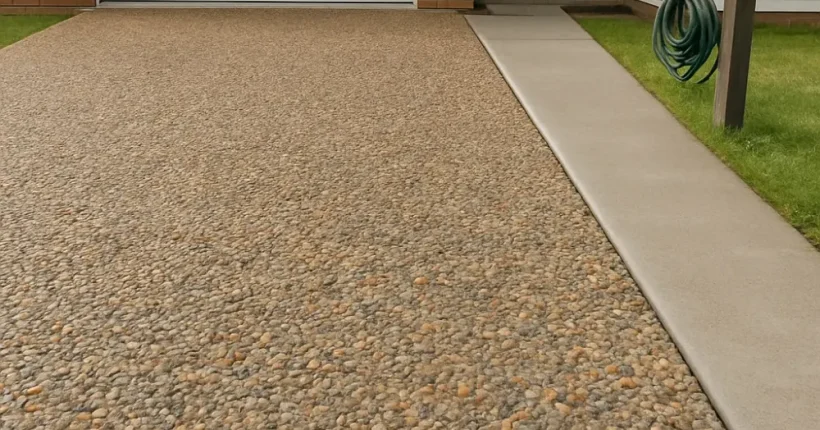
Exposed aggregate is the finish we are asked for most, and it is the practical choice as much as the good-looking one. Tyre marks, oil spotting and leaf staining show far less on stone than on plain grey, and the exposed stone grips underfoot when wet, which matters on a sloping driveway.
It runs $130 to $200+ per square metre against $100 to $150 for plain. Sealing is quoted separately so you can decide once you have seen the driveway finished.
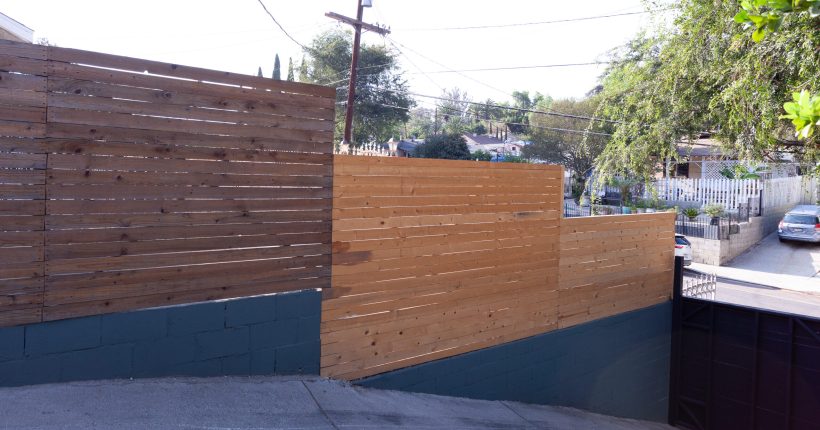
We stamp driveways in slate, cobblestone and timber patterns, so you get the look without laying pavers. One slab means no bedding sand to wash out and no individual units to lift or settle out of line.
It runs $120 to $170 per square metre, the same band as coloured concrete. Grip additive goes into the sealer as standard, since a smooth patterned surface is otherwise slippery wet. Pattern and colour are locked in before we pour.
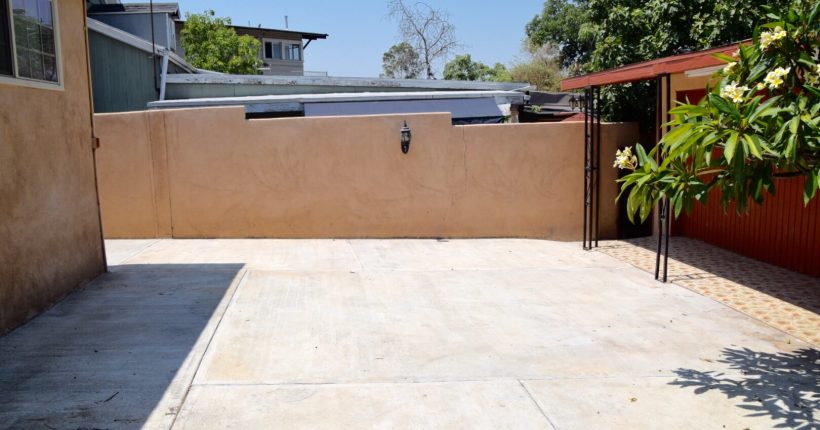
We pour coloured driveways where plain grey does not suit the house. The colour is mixed through the concrete, so it will not flake or wear back to grey the way a surface coating does, and it sits at $120 to $170 per square metre, between plain and exposed aggregate.
The oxide goes in at the batching plant, so colour and quantity are fixed before the truck leaves. We confirm both with you and order a margin over.
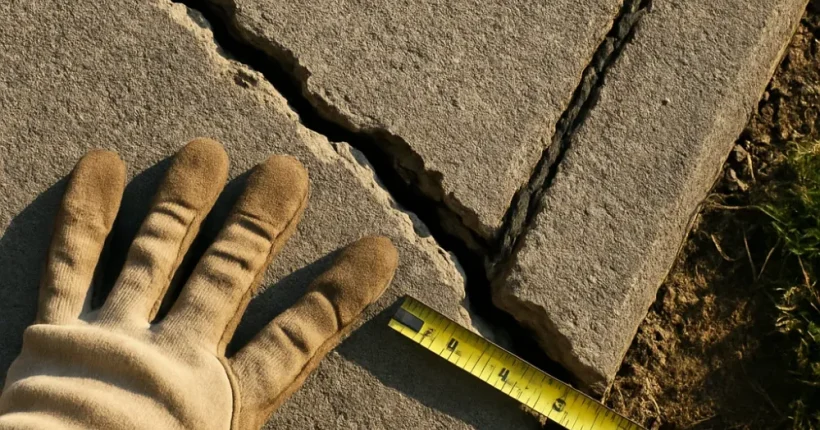
We work out whether you need a new slab before we price one. Fine surface crazing and white staining are usually cosmetic, and dealing with those costs far less than replacing. Panels that have stepped or tilted mean something has moved underneath, and a fresh surface laid over that will move again.
If it does need replacing, the cost turns on how thick the old slab is, whether it holds mesh at 100 mm or more, machine access and tip fees.
Driveway Build Method
STEP ONE
We look at the subgrade, the levels, where water currently runs and how a truck reaches the pour. We check your address on the council flood viewer and District Plan overlays, and confirm whether the crossing application applies. No charge, no obligation.
STEP TWO
A written quote follows within a few days, stating the concrete grade, mesh grade and basecourse depth for your site. If you accept, we lodge any crossing application and the Corridor Access Request and book the pre-pour inspection. Council allows ten working days to complete once the permit issues.
STEP THREE
Strip to depth, cart away, basecourse compacted in layers. Boxing set to level with falls confirmed, mesh on chairs at correct cover, then the pre-pour inspection if a crossing is involved. Place, screed, float and finish, holding the trowelling until the bleed sheen has gone. Joints cut the same day or next morning depending on temperature. Foot traffic after a day or two, vehicles at seven days and ten in winter.
Free Site Visit
A concreter walks the property, checks the subgrade, the levels, the drainage and the access, and confirms what your driveway needs before any numbers come into it. No charge and no obligation.
Two driveway quotes in Hamilton rarely cover the same work. Some published rates are supply and place only: concrete, labour and finish, with excavation and drainage outside the number. On this ground that is most of the job, so ask each quote what sits inside the figure before you compare them.
For the record, the structural build is 20 MPa concrete at 100 mm minimum over compacted basecourse, laid in layers no thicker than 150 mm, with 665 mesh at 30 mm cover and joints cut. Ready-mix is produced to NZS 3104, and the certification register is public if you want to check the plant supplying your job.
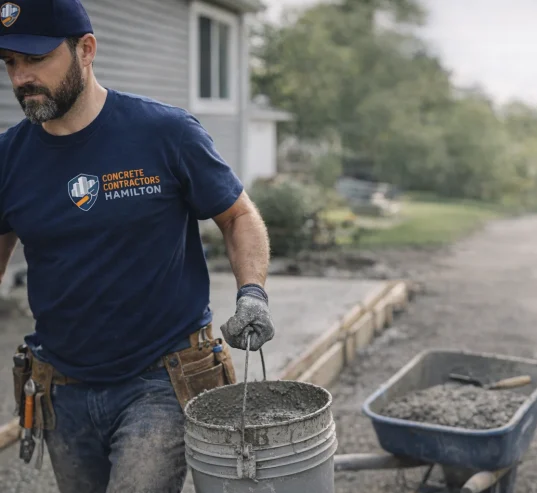
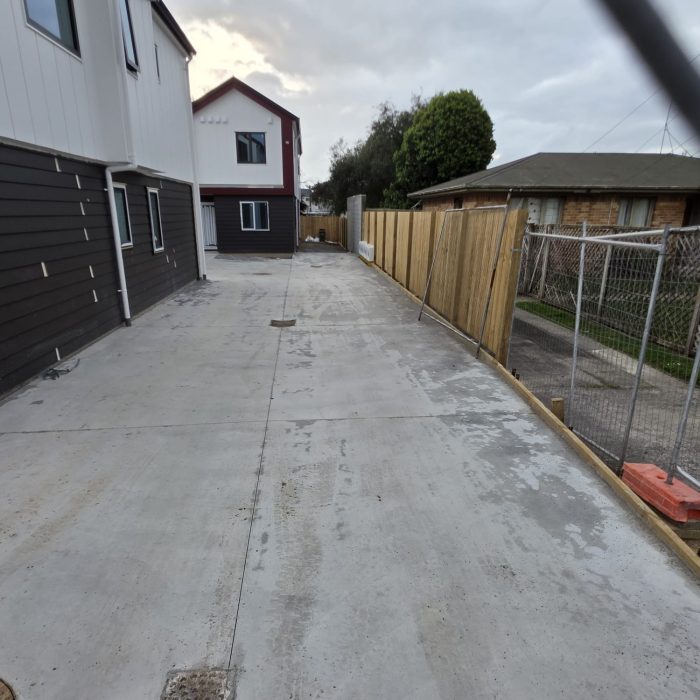
Plain broom finish sits at roughly $100 to $150 per square metre for a finished job. Exposed aggregate runs $130 to $200+, stamped $120 to $170, coloured $120 to $170. We publish ranges because two driveways of the same size on the same street can price differently.
What separates them, in rough order of impact:
As whole jobs: a standard 30 m² driveway lands between $3,000 and $4,500, a 60 m² replacement between $7,200 and $10,800, and resurfacing a 50 m² driveway between $2,000 and $4,000.
Council Requirements
One council requirement comes up on driveways, and we deal with it so you are not chasing it.
The crossing is the section between your boundary and the road. Council approves, inspects and signs off new crossings and repairs, and asks to be contacted first, so any job that reaches the crossing goes past them before we start. Work in the road reserve also needs a Corridor Access Request. Residential crossings run 3 to 5.5 metres wide at the boundary, built to the Regional Infrastructure Technical Specification, with 48 hours notice for the final inspection. We lodge the application, book the inspections and give you the timeline at the site visit.
A driveway is usually the first job on a property and rarely the last, and the paths, patio and shed floor that follow get quoted by the same concrete specialists in Hamilton.
Vehicle crossing requirements per Hamilton City Council. Basecourse depth set by the subgrade and compacted in layers. Ground and groundwater figures from Hamilton City Council geotechnical reporting, mapped at catchment scale and not a substitute for site assessment.
Hamilton Ground Conditions
Basecourse depth is a decision we make on your quote, because the ground under Hamilton is not one thing. Four features of it change what a driveway needs.
Two soils sit under most of Hamilton, and the one you have decides the base. It left low mounds and shallow swales, and which one your property sits on changes what the driveway needs underneath it.
Free draining, and they sit on the mounds. These are the sites where a standard basecourse depth usually does the job without extra drainage work.
Slower soils lying in the swales. They hold water under a slab after rain, so the base depth and the drainage both have to be built around that.
Council geotechnical reporting puts the water table as shallow as 0.1 metres at Rotokauri North and inside the top 3 metres across much of the western city. At that depth the excavation fills, basecourse will not compact, and the driveway needs subsoil drainage before anything is poured. Peat covers close to a quarter of the city, mostly through the western suburbs, and also turns up as buried layers on sites that look ordinary from the street.
None of that reads off a map at property level, which is why we walk the site before we put a basecourse depth on a quote.
Winter Pours
Concrete does not read the calendar. It reads the temperature of the air and the ground on the day it goes down, and Hamilton gets frosts every winter. From roughly May to September that changes when we pour, not whether we pour, and it is the part of the job most quotes say nothing about.
| On the day | What happens to your pour |
|---|---|
| Air at 5°C on a falling thermometer, or 2°C on a rising one | No concrete is placed. Those are the limits in NZS 3109 for placing and curing, and there is no working around them. |
| Air below 10°C | Hydration is retarded, so setting and strength gain both take longer. Joints usually go in the next morning rather than the same day. |
| Frost forecast overnight | The pour moves. A frost on green concrete damages the surface for good, and no sealer applied afterwards puts it back. |
| Winter generally | Vehicles wait ten days instead of seven, and the date is confirmed against your own slab rather than a rule of thumb. |
Swipe the table sideways to see every column.
What that means for booking: a winter driveway needs more flexibility on the date than a summer one does. If the forecast turns, you hear from us the day before rather than after we have poured into it.
Concrete Driveways, Hamilton
New driveways, replacements, widening, extra parking bays and vehicle crossings across Hamilton. Licensed, insured, and set up to handle the council side of the job. Tell us what you are planning and we will tell you what it takes.
Concrete Driveway Questions
Plain broom finish runs about $100 to $150 per square metre. Exposed aggregate is $130 to $200+, stamped $120 to $170, coloured $120 to $170. The spread comes from what sits under the slab. When comparing quotes, check whether excavation, cartage and drainage are inside the number.
For the vehicle crossing, yes, and that includes repairs. Hamilton City Council approves, inspects and signs off new crossings, rebuilds and repairs of existing ones, and asks to be contacted before work starts. Residential crossings run 3 to 5.5 metres wide at the boundary, and the application form asks whether the driveway slope exceeds 1:12, so a sloping site is flagged there. We lodge the application and book the pre-pour and final inspections.
100 mm is the minimum for a residential driveway, rated to 2.5 tonnes, over about 100 mm of compacted basecourse. Over a wet swale site, a high water table or peat influence, it goes to 150 mm with deeper basecourse and drainage added. Anything taking trucks or tankers should be engineered to the load.
Walk on it after a day or two, carefully at the edges. Cars at seven days, and ten in the colder months. Curing slows in a cold, damp Hamilton winter and that stretches, so you get the date for your own pour instead of a rule of thumb. Heavier vehicles wait longer again.
Sometimes, and we will say so when it is the sensible option. Surface crazing and efflorescence are usually cosmetic. Stepped or tilted panels suggest the ground has moved, and resurfacing over that covers the symptom instead of the cause. We diagnose before quoting a fix.
All of Hamilton City, from Rototuna and Flagstaff in the north through Chartwell, Claudelands and Hamilton East to Glenview and Melville in the south, and west across Frankton, Dinsdale, Nawton and Rotokauri. We also take driveway work on the rural fringe, including Tamahere, Matangi and Newstead.