
Concrete Contractors Hamilton pour rural driveways, shed floors, hardstand, patios, paths, house slabs and repair work on Tamahere properties. The Tamahere work is done by the crew that runs our city jobs, with the floor slab in a new house built to NZS 3604, and a specific engineering design where the ground rules that out. Most sections here are large and rural zoned, and the settlement sits amongst a network of gullies running down to the Waikato River, so the ground rarely gives you a flat run from the road to the shed.
That terrain decides how a pour gets staged. Levels change over the length of an entrance, falls have to be set deliberately, and the boxing follows the ground instead of a drawing. We walk the entrance rather than measure it from the gate, check turning space for a six wheeler and whether a pump beats a long run of barrowing, then put a written quote in front of you covering the base, the steel, the pour and the finish.
4.8/5 Ratings
Hamilton
Projects Completed
Years in Business
Happy Clients
Concrete Services in Tamahere
Rural driveways, shed floors, hardstand, patios, paths, house slabs and repairs are the work we take on around Tamahere.
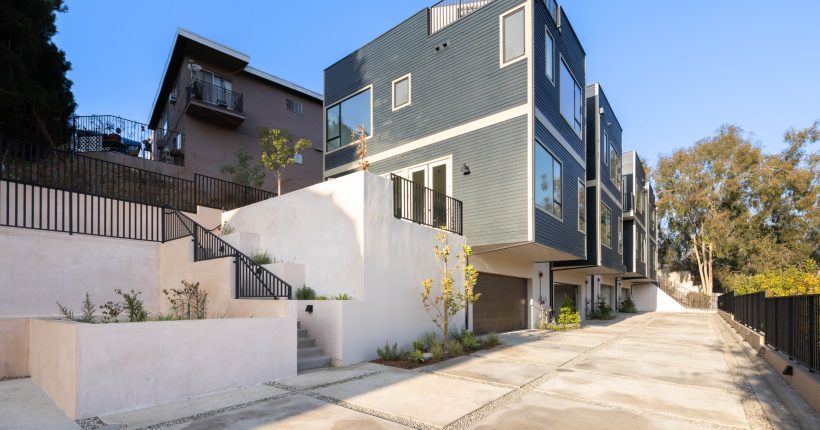
We build long entrance driveways to the load that will actually run on them, because a Tamahere entrance carries more than the family car. Trade utes, a horse float, a delivery truck and the odd contractor’s tipper all use the same strip.
That pushes most rural driveways to 150 mm over compacted basecourse with 665 mesh, and 25 MPa where anything over three tonnes gross is a regular visitor. Standard residential work sits at 100 mm and 20 MPa.
Tell us at the site visit where two vehicles need to pass. Widening one section beats widening the lot.
Slabs and foundations we scope from the drawings, because the design, the area, the ground and the exposure all change the work, and none of that shows up in a floor area.
We build to NZS 3604 and to the engineer detail where one is involved.
Bring the plans to the site visit. A set of drawings turns a rough conversation into a defined scope, and on a gullied section that matters more than it does on the flat.
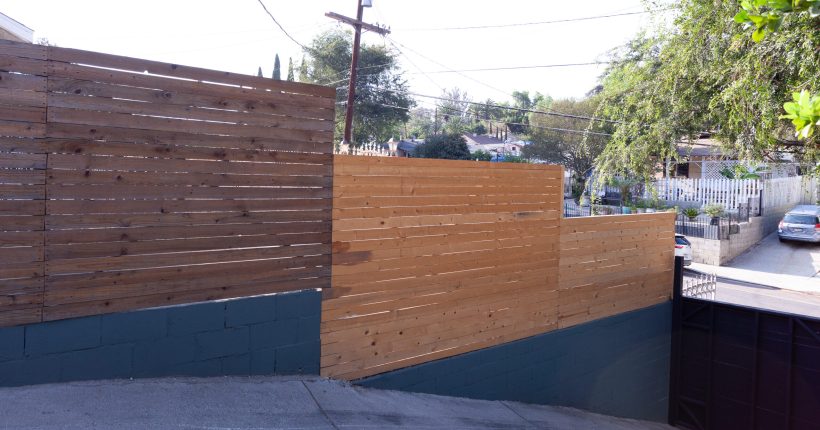
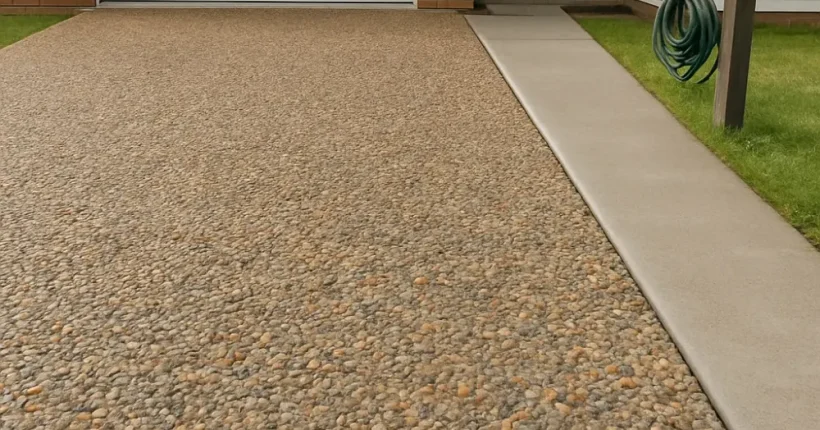
Outdoor living areas are where finish choice earns its money, so we take you through plain, coloured, exposed aggregate and stamped before quoting. Exposed aggregate holds grip when wet and hides the marks a plain slab shows.
Colour is oxide batched through the mix or a hardener worked into the surface, and mixed-through colour will not flake back to grey.
Sealing is recommended on exposed aggregate. Decide the finish early, because it sets the price band.
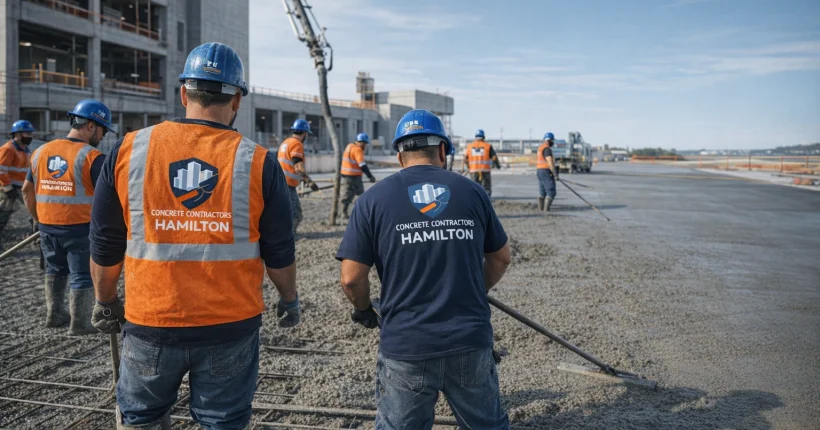
The second thing we get asked for here is shed floors, and Waikato District Council’s Tamahere Blueprint records home-based businesses among the settlement’s economic opportunities. A working shed floor is a different slab from a garage floor.
Thickness follows the heaviest thing that will sit on it, point loads included. We power float where you want a surface that sweeps clean, and set falls to the door so wash water leaves.
Say what is going in before we quote. A hoist or a rack changes the steel.
Access we plan before the trucks arrive, and on a gullied Tamahere section that planning is the job. The council’s Blueprint describes the settlement as positioned amongst a network of gullies which are tributaries to the Waikato River.
Practically, that means levels and falls get set by where the ground already goes. We check turning space for a six wheeler, the swing onto the driveway and whether a pump is cheaper than a longer run of barrowing.
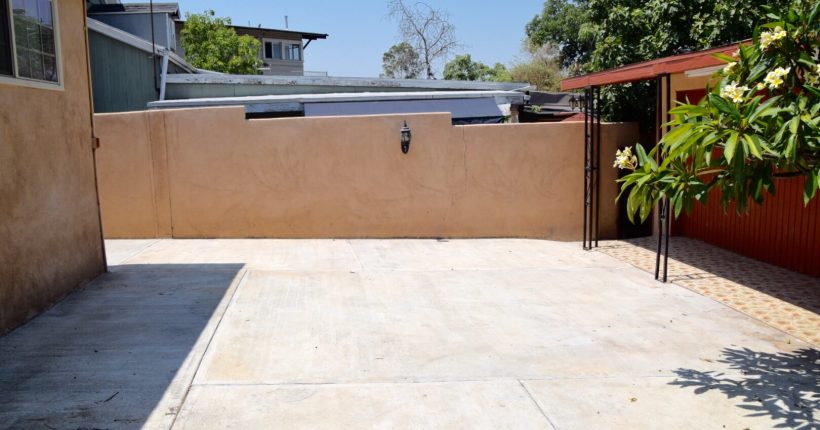
Paths link the parts of a large property that never got joined up, and we programme them alongside a bigger pour wherever the timing allows.
A narrow run carries the full setup for very little concrete, which is why doing one on its own rarely makes sense. Falls take water away from the house and joints get cut to control where the slab cracks. Steps are formed and cast with the run so the nosings line through instead of stepping out of true.
We lay exposed aggregate and coloured finishes where a property wants the surface to read as part of the house rather than as utility.
Exposed aggregate suits a long entry because it hides the marking a shared driveway collects. Colour goes through the mix as oxide, not onto the surface, so the edges do not wear back to grey under tyres. Tell us what the house is clad in and which way the area faces, and we will match to it.
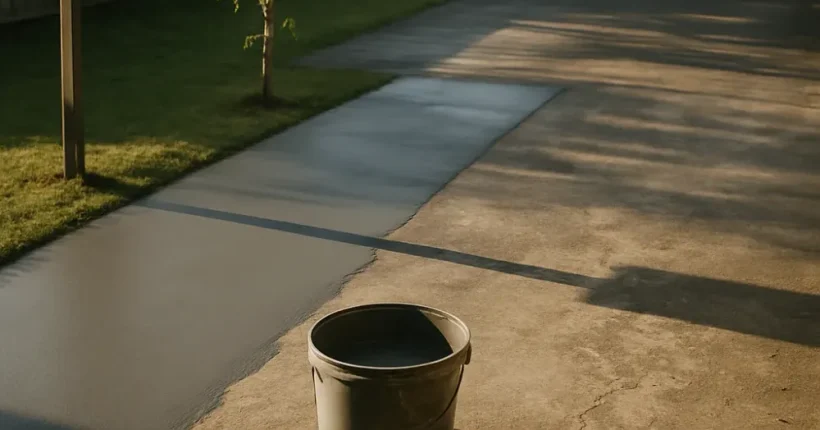
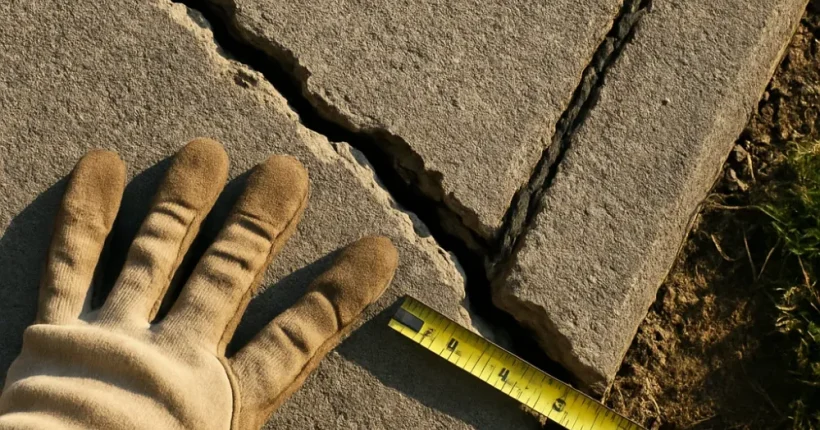
Cracks we stitch and fill where the crack is stable and the slab either side is sound. Where panels have lifted or settled, resurfacing covers the symptom and leaves the cause underneath.
We say which one you have at the assessment, and we will tell you when repair is the better option.
Breaking out reinforced concrete is scoped on thickness, steel, machine access and tip arrangements, so we look at it before we commit to a day.

We seal concrete on the surfaces that get judged, which on a section like this is the entry and the area around the house rather than the far end of the driveway.
Sealed concrete resists staining from leaf litter and the tannin that comes off overhanging trees, which is the usual complaint on a gullied site. A penetrating sealer soaks in and will not peel in full sun. Surfaces have to be clean and fully dry, so it is a separate visit.
Free on-site assessment
The assessment is free. We look at the ground, the falls and the drainage first, then put the quote in writing.
Tamahere Concrete Pricing
These are indicative ranges, they, and they are not a quote. Every job is priced after the free on-site assessment.
Driveways and flatwork, per m², roughly 30 m² and up
| Finish | Range per m² |
|---|---|
| Plain or broom finish | $100 to $150 |
| Coloured concrete | $120 to $170 |
| Exposed aggregate | $130 to $200+ |
| Stamped or patterned | $120 to $170 |
The $100 end assumes clear access and ground that needs no extra work, which on a Tamahere property is worth checking rather than assuming.
Patios, paths and smaller areas, per m²
| Item | Range per m² |
|---|---|
| Patio or courtyard, plain, roughly 15 to 30 m² | $100 to $150 |
| Paths, footpaths and narrow strips | $100 to $150 |
What the ranges include: subgrade preparation, excavation and cartage, compacted basecourse, reinforcement, the pour, the finish, joint cutting and clean-up. Watch for published rates elsewhere that cover supply and place only, with the excavation and base left outside the number.
Quoted per job, with no published figure: house slabs and foundations to NZS 3604, engineered slabs, commercial slabs and hardstand, breaking out and removing existing concrete, and concrete sealing.
Tamahere Site Conditions
Tamahere is a Waikato District settlement, and the council’s Tamahere Local Area Blueprint describes it as located on, and severed by, SH1 south of Hamilton, positioned amongst a network of gullies which are tributaries to the Waikato River. That is terrain, and terrain is what decides how a pour is staged here.
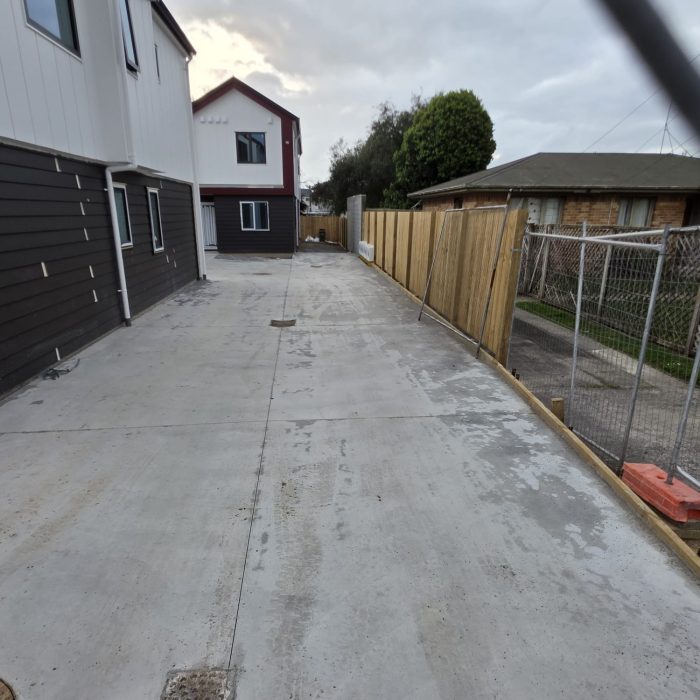
A gullied section rarely gives you a flat run from the road to the shed. Levels change over the length of an entrance, so falls have to be set deliberately and the boxing follows the ground. Being severed by SH1 also means the practical route for a concrete truck is not always the short one on a map. We confirm the approach at the assessment, before pour day.
The same Blueprint puts the Tamahere population at 3,668 on a 2023 council estimate, with the council expecting roughly 3,600 by 2060. That is a council estimate and a council projection. Read plainly, it describes a settled place instead of a fast-changing one, and it matches what we see in the work: renewal, extension and better use of properties people intend to keep. The Blueprint also records community feedback that any growth should keep the character of the settlement, and that land near SH21 and Tamahere Drive is only being investigated for a change from rural to Village zoning.
Council material for Tamahere runs to gully restoration and the Mangaone Stream revegetation and walkway work as a top priority initiative. We mention it for one reason: on a property that backs onto a gully, where water goes after it leaves your new hard surface is a design question worth settling at the quote, not after the pour.
A gullied Tamahere entrance is worked out on foot before it is priced, which is the sort of visit that only makes sense when the concrete services out of Hamilton are a short run away.
Free on-site assessment
The assessment is free. We look at the ground, the falls and the drainage first, then put the quote in writing.
Tamahere Concrete Questions
Plain or broom finish runs $100 to $150 per m². A coloured finish prices at $120 to $170, exposed aggregate at $130 to $200+ and stamped at $120 to $170. Those are indicative ranges and not a quote. A Tamahere entrance is often longer than a town driveway and sometimes needs 150 mm rather than 100 mm, so the area and the loading both need checking at the free assessment before a real number exists.
We walk the entrance rather than measure it from the gate, because levels on a gullied section change more than they look like they will. We check turning space for a six wheeler, the swing onto the driveway and whether a pump beats a long run of barrowing. What applies at the address is confirmed before we price it, then the written quote follows.
Standard residential work is 100 mm at 20 MPa over compacted basecourse, with 665 mesh at 30 mm cover in the top third and joints saw-cut, carrying up to 2.5 tonnes. Rural entrances at Tamahere usually justify 150 mm with heavier steel, and 25 MPa once anything over three tonnes gross uses the driveway regularly. Horse floats and tipper deliveries count.
Foot traffic comes first, vehicles later, and we give you the dates at handover for your pour and the weather it went down in. Concrete keeps gaining strength after it is walkable, so driving on it early is how edges get damaged. On a gullied section with only one way in, plan for the gap. If that is a problem, tell us at the assessment and we will look at pouring in stages.
Usually, and that is exactly what the site visit settles. Waikato District Council’s Blueprint describes Tamahere as positioned amongst a network of gullies, and levels along an entrance often change more than owners expect. We check the approach, the turning space and whether the truck can discharge directly or whether pumping is the sensible option. Knowing that before pour day is what keeps the price where the quote put it.
Repair works where the crack is stable and the slab either side is sound. Stitching and filling is the cheaper answer and we recommend it when it is the honest one. Where panels have lifted or settled, resurfacing hides the movement without fixing it, and replacement is the better spend. We tell you which you have at the free assessment, and breaking out is quoted per job on thickness, reinforcement, access and tip fees.
Tamahere, Matangi, Newstead, Horsham Downs, Horotiu, Ngāruawāhia, Te Kōwhai, Ōhaupō and Rukuhia, alongside Hamilton City where most of our work is.